 Your Bizarre Adventure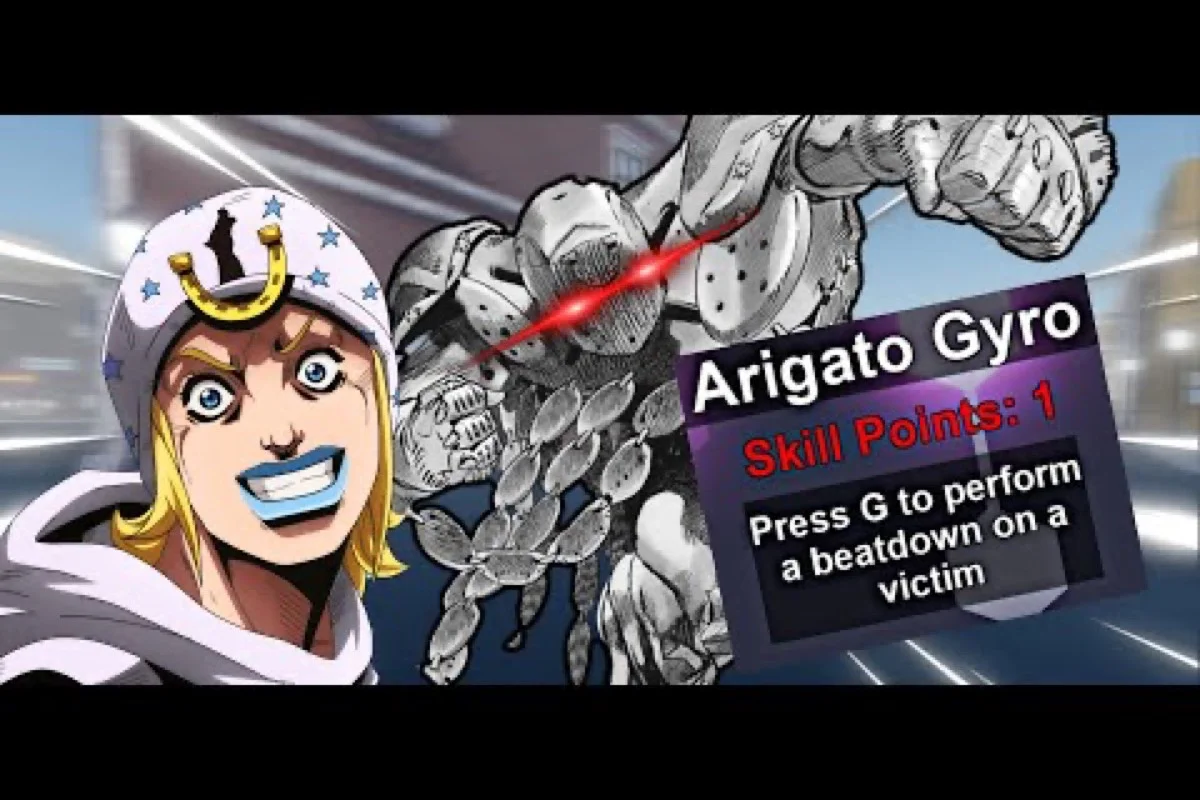
YBA Tusk ACT 4 is the terminal form of the Tusk line and the only Stand in the game whose damage scales off the Spin mechanic. Reaching it means clearing the whole Steel Ball Run quest chain and feeding each earlier Tusk form — ACT 1, ACT 2, and ACT 3 — through its own prerequisite first. This guide covers the full unlock sequence, the rotational damage profile that makes the form worth the grind, and the build choices that hold up in ranked PvP.
Tusk ACT 4 at a Glance: What the Final Form Actually Does
Tusk ACT 4 is the terminal evolution of the Tusk line in Your Bizarre Adventure, sitting at the very top of the Part 7/8 evolution tree. The Stand is the only one in the game that builds its offensive power through the Spin mechanic, which means it scales off a hidden stat that no other Stand uses, and it requires a quest chain that runs through every SBR stage before it ever becomes usable in a real fight.
The community treats this Stand as a hard-gated project rather than a drop-and-go reward. Every form before it — Tusk ACT 1, Tusk ACT 2, and Tusk ACT 3 — is a stepping stone with its own prerequisite, and the Tusk ACT 3 unlock walkthrough is where most players first see the full scope of the line. The full progression table reads:
| Form | Trigger | Worthiness | Prestige | Extra Cost |
|---|---|---|---|---|
| Tusk ACT 1 | Ribcage of the Saint's Corpse | I | 0 | None |
| Tusk ACT 2 | Left Arm of the Saint's Corpse on ACT 1 (requires Spin learned) | II | 0 | $15,000 item price |
| Tusk ACT 3 | Jesus NPC on ACT 2 — server's first to talk to him | V | 0 | High rarity race |
| Tusk ACT 4 | Pelvis of the Saint's Corpse on ACT 3 | V | 0+ | $45,000 item price |
Two numbers matter most for the cost curve: Left Arm of the Saint's Corpse lists at $15,000 and Pelvis of the Saint's Corpse lists at $45,000 in the official NPC shop pricing table, both with a stack cap of 10. Combined, the cash floor for the last two evolutions alone is $60,000, and that does not include the SBR entry cost or the Spin unlock item from Gyro.
The ACT 4 kit leans on rotational projectile pressure as its win condition: you build the Spin resource through low-commitment hits, then convert it. That single idea is the reason players chase the Stand in the first place, and it is also the reason the build path differs from every other Part 7/8 pick in the game. You are not building for damage per second — you are building for setup, hit-confirm, and one decisive conversion.
The Pelvis Path: How Tusk ACT 4 Actually Evolves
The official Trello evolution card lists the recipe in a single line: Pelvis of the Saint's Corpse applied to Tusk ACT 3 produces Tusk ACT 4. There is no other recipe, no second material, and no time gate attached to the evolution itself. The difficulty is everything that comes before the recipe, not the recipe itself.
Upgrading Tusk ACT 4 Stage by Stage
-
Roll Tusk ACT 1 from a Ribcage of the Saint's Corpse. Ribcage of the Saint's Corpse is purchasable for $3,500 from the NPC shop, has a 10-stack cap, and is tradable. Spin must already be unlocked through Gyro Zeppelli using a Steel Ball before ACT 1 can evolve, so order this in advance.
-
Use Left Arm of the Saint's Corpse on ACT 1 to evolve into ACT 2. Worthiness II is the gate. Left Arm of the Saint's Corpse is listed at $15,000, stack cap 10, and tradable. The evolution card explicitly requires Spin, so if Gyro's quest has not been completed, the item will not register.
-
Find the Jesus NPC as the first player on your server to talk to him. This is the Tusk ACT 3 gate. The Worthiness V requirement is the highest in the early evolution tree, and the "first to talk" race means a populated server makes this much harder than a solo or low-pop one. The full quest is covered in the Tusk ACT 3 unlock walkthrough, including which server conditions improve your odds.
-
Use Pelvis of the Saint's Corpse on ACT 3 to evolve into ACT 4. Worthiness V is still the gate. Pelvis of the Saint's Corpse lists at $45,000 with a 10-stack cap, tradable. This is the most expensive single step in any Part 7/8 Stand evolution in the game.
Why the last hop is the cheapest mechanic-wise
The Pelvis step is the only part of the chain with no NPC dialogue, no SBR stage, and no first-to-talk race. Once ACT 3 is in hand, ACT 4 is a wallet check plus a material pickup. The community treats the SBR farming that funds the Pelvis purchase as the real grind, not the evolution itself.
| Stage | Main Resource | Where It Comes From | Time Sink |
|---|---|---|---|
| ACT 1 | Ribcage ($3,500) | NPC shop | Low |
| ACT 2 | Left Arm ($15,000) + Spin learned | NPC shop + Gyro quest | Medium |
| ACT 3 | Jesus NPC race | First to talk on a server | High |
| ACT 4 | Pelvis ($45,000) | NPC shop, SBR winnings, or ShiftPlox sell-back | High cash, low time |
A common community pattern is to use the ShiftPlox, The Travelling Merchant sell-back path to fund the chain. ShiftPlox pays $1,200 per Ribcage, $2,500 per Heart, and $1,000 per Steel Ball, and most players accumulate more Corpse Parts than they need when chasing D4C or Scary Monsters rolls. Selling the surplus to ShiftPlox is the cleanest in-game source of evolution cash without spending Robux.
Stand Kit Breakdown: What Tusk ACT 4 Actually Plays Like
The ACT 4 kit is the most combo-light kit on the Part 7/8 roster because every line of damage routes through one pressure tool and one payoff tool. That is by design — the official Trello card positions Tusk ACT 4 as a high-skill execution Stand, not a combo volume Stand.
The damage and utility moves
The kit is built around rotational nail projectiles and the Spin resource rather than around a long combo string, and the developer does not publish a per-move damage table for it. What the official material does document is the evolution gating — the Pelvis step, the Worthiness V requirement on the ACT 3 step, and the Spin prerequisite on the Left Arm step. Damage and cooldown values live only in the in-game skill tree UI, so any figure you see in third-party tier lists is media-sourced and should be treated as guidance rather than as fact.
The practical consequence is that Tusk ACT 4 is a position-and-read Stand: you apply rotational pressure until the opponent is forced into a commitment, then convert that commitment. That reading of the kit is community interpretation, not an official move table.
The matchup profile
Tusk ACT 4 plays very differently depending on the opposing Stand. It is a counter-projectile kit by design, which means it struggles against Stand rushes that close the gap before the player can stack Spin, and it thrives against Stands that rely on a single long-ranged option. The community matchup map, paraphrased from player testing rather than from any official source, looks like this:
| Opposing Stand Type | Matchup | Why |
|---|---|---|
| Projectile-heavy (Gold Experience, The World) | Favorable | Rotational projectiles outrange the poke |
| Rushdown (Star Platinum, King Crimson) | Unfavorable | Spin stacks need time the kit does not have |
| Other Part 7/8 (Soft & Wet, D4C) | Even | Mirror match on the items, not on the kit |
| Tanky bruiser (The Hand) | Slightly favorable | Rotational chip pressures a low-mobility target |
The Soft & Wet comparison is worth pausing on because both Stands share the Part 7/8 item economy. YBA Soft & Wet has a similar item-based pressure layer, but its kill confirm is bubble-based rather than Spin-based, so the two Stands do not actually compete in the same role. The community treats them as parallel ladder climbers rather than direct counters.
Stat Point Spending for Tusk ACT 4
The Tusk ACT 4 build is the most opinionated in the Part 7/8 line because the Stand does not scale with raw damage skill points the way Sticky Fingers or King Crimson do. Every point goes into either rotational damage, defensive utility, or the skill tree's own gating nodes, and the rest is wasted.
Skill tree priorities
The game gives +2 skill points per level, and the Tusk ACT 4 tree has four lines that matter. The community-optimal allocation, as reported by high-rank Tusk mains rather than as a published figure, is:
| Skill Line | Priority | Reason |
|---|---|---|
| Spin generation | Highest | Faster setup, more conversion windows |
| Rotational damage | High | One-shot threshold at high rank |
| Block / utility | Medium | Survives rushdown long enough to stack |
| Move cooldown | Lowest | Marginal but real at high skill |
This priority order is not in the official Trello material. The official card lists the moves and the gating but does not publish a recommended allocation, and the in-game skill tree UI only shows unlock order rather than a numerical weight. Treat the ranking as a community pattern, not a fact.
Fighting style pairing
The Spin line of Tusk unlocks the Spin fighting style through Gyro Zeppelli with a Steel Ball, and that is the natural style for any Tusk evolution. The four Hamon variants are the alternative path because of their block-piercing utility, but they require a different teacher item and a different skill tree reset. The community pattern is:
| Fighting Style | Synergy With Tusk ACT 4 | Why |
|---|---|---|
| Spin | Strong | Same stat family, no waste |
| Hamon (Joseph / Jonathan / Caesar / Zeppeli) | Medium | Counter-pick vs Vampires only |
| Boxing | Weak | No Spin synergy, no block utility |
| Vampirism | Weak | Race-locked, loses Ultraviolet fights |
A Vampire race is the only race-locked interaction worth flagging. Vampire cannot switch to a stored Hamon or Spin style, so a Vampire running Tusk ACT 4 is forced into Vampirism + Boxing + Sword-Style only. This is the only race-restricted variant of the build, and it is generally regarded as suboptimal.
Item loadout
The Tusk ACT 4 loadout is short and has one decision that matters: whether to keep a backup Mysterious Arrow in case the Stand is removed. Rokakaka removes the Stand and refunds all skill points, so a Tusk ACT 4 player is one trade away from losing the whole build. The recommended inventory at high rank is:
| Slot | Item | Why |
|---|---|---|
| 1 | Mysterious Arrow (held, not used) | Insurance against Rokakaka |
| 2 | Rokakaka (if dual-wielding isn't needed) | Defensive trade protection |
| 3 | Pure Rokakaka | Respec only, does not remove Stand |
| 4 | Blood Bottle | ~+15% HP for survival |
Stack caps matter here: Mysterious Arrow is capped at 25, Rokakaka at 25, and Pure Rokakaka is much rarer and bound to a random spawn. Players who carry a backup Mysterious Arrow are not losing any offensive slot, since the arrow is held (via Backspace to drop) rather than actively used in combat.
PvP Strategy: How Tusk ACT 4 Closes a Round
The rotational confirm is the whole reason the Stand exists, and the ladder community has converged on a three-stage plan to land it consistently. The plan is not official — it comes from ranked ladder play and tournament prep — but it is widely repeated because it survives the rank reset every season.
Stage 1: Open with pressure, not damage
Tusk ACT 4 should not chase the opening hit. The right opener is a low-commitment rotational poke to force a movement option, then read the opponent's recovery frame. Players who try to open with a heavy hit lose the round because the Stand does not have the health pool to absorb a trade, and the Spin stack window is too valuable to spend on a coin-flip opener.
Stage 2: Stack Spin on whiff
Every rotational hit that lands without retaliation adds Spin. The goal of the first 20 seconds of the round is to stack Spin without committing to the close-range combo, which is why Tusk ACT 4 plays like a footsies character more than a rushdown character. The community-recommended target is two clean rotational hits before the kill confirm attempt, which is enough Spin to make the confirm lethal at most HP breakpoints.
Stage 3: Confirm on read
Once two Spin stacks are banked, the player switches to the close-range confirm. The confirm is a standard combo ender, and the kill is reading the opponent's F-block timing. Players who spam the input lose to F-block timing; players who wait for the block end-frame win. The match-winning layer is the read, not the input.
Counterplay and the meta
The Tusk ACT 4 player loses to a Star Platinum: The World opener because YBA Star Platinum The World has the fastest time-skip in the game, which closes the Spin-stack window before the player can bank two stacks. The reverse is also true: Tusk ACT 4 is a counter-pick to The World because The World does not have the Spin mechanic and cannot trade damage efficiently at mid-range. The matchup map, paraphrased from ladder testing:
| Opponent | Strategy | Win Condition |
|---|---|---|
| The World / Star Platinum: The World | Play mid-range, force dash | Outrange the time-skip |
| King Crimson | Predict the Timeskip read | Don't commit on skip frames |
| Gold Experience | Pressure, don't combo | Force the life creation |
| Soft & Wet / D4C | Item denial | Control the bubble / clone trade |
| Scary Monsters | Hold block, wait for the lunge | Punish the recovery |
The YBA Scary Monsters matchup is a special case because both Stands come from the same Ribcage pool, so they share the Part 7/8 item economy. The two Stands are not direct counters — Scary Monsters wins close range and Tusk ACT 4 wins mid-range — so the matchup is usually decided by who controls the spacing, not by the kit.
Where Tusk ACT 4 Sits in the 2026 Part 7/8 Meta
The Part 7/8 meta in 2026 is dominated by three Stands: YBA Tusk ACT 4, YBA Soft & Wet, and YBA D4C, with YBA Scary Monsters as a niche counter. The community tier list, paraphrased from media coverage rather than from any official source, ranks them roughly:
| Stand | 2026 Rank | Strength | Weakness |
|---|---|---|---|
| Tusk ACT 4 | Top-tier | Rotational confirm, range control | Squishy, Timeskip vulnerable |
| Soft & Wet | Top-tier | Bubble control, item pressure | Lower single-hit damage |
| D4C: Love Train | Top-tier | Clone trade, dimension swap | High item cost, complex |
| Soft & Wet: Go Beyond | High | Tracer line, block bypass | Requires Go Beyond evolution |
| Scary Monsters | Mid | Lunge pressure, dinosaur kit | Predictable recovery |
| Tusk ACT 3 | Mid | Pre-evolution power spike | Outclassed by ACT 4 |
The official Trello secondary board has a skin tier list that uses many of the same Stand names — including YBA The World Over Heaven as a S+ skin entry — but the skin tier list is sorted by skin rarity points (1701-3000 for S+, 1301-1700 for S, and so on) and not by PvP strength. Do not confuse the two. A high skin rarity does not mean the Stand is meta, and the official Trello does not publish a PvP tier list at all.
The 2026 PvP meta is also shaped by the season reset, which happens every four months (January, May, September). Season 1 began in May 2024, so the current calendar puts the active season in the second half of a cycle. After each reset, players with prior rank start one division lower, and Placements do not lose RP for the first five matches. This means the first week after a season reset is the cheapest time to grind placement matches on Tusk ACT 4, because the ranking floor is closer to your actual skill level and the ladder population is full of Placements players who are also resetting.
Frequently Asked Questions
Is Tusk ACT 4 worth the grind in 2026?
Yes if your goal is a Part 7/8 ladder build, because the rotational confirm remains one of the strongest single conversions in the game and the kit has not been reworked in recent patches. No if you mainly play story content, because ACT 3 is already strong enough for every story boss and the ACT 4 step is purely a PvP optimization. The Pelvis + Spin + Worthiness V stack is a real time sink, so budget at least two weeks of SBR farming before starting the chain.
Can I get Tusk ACT 4 without doing Steel Ball Run?
No. The full chain requires Gyro's Spin unlock, the Left Arm evolution on ACT 1, the Jesus NPC race for ACT 3, and the Pelvis of the Saint's Corpse evolution for ACT 4. None of these steps are reachable from story content alone. SBR is also the cleanest funding path for the $45,000 Pelvis purchase, because first-place race winnings outpace ShiftPlox sell-back rates for a high-volume farmer.
How does Tusk ACT 4 compare to YBA Soft & Wet or YBA D4C?
Tusk ACT 4 is the most execution-heavy of the three. Soft & Wet wins through bubble control and item pressure, D4C wins through clone trades and dimension swaps, and Tusk ACT 4 wins through one decisive rotational confirm. The community treats them as parallel ladder picks rather than strict counters, but YBA D4C in its Love Train form has a slight edge in tournament play because of how forgiving its clone trade is on a missed read.
Do I need a specific race to use Tusk ACT 4?
No. The official Trello evolution card does not lock Tusk ACT 4 to any race. The only race interaction is that Vampire cannot use a stored Hamon or Spin fighting style, so a Vampire running Tusk ACT 4 is restricted to Vampirism, Boxing, or Sword-Style. Human is the recommended race because it does not lock the style slot, and Majin is officially UNOBTAINABLE so it is not a real option.
What is the cheapest way to fund the Pelvis of the Saint's Corpse?
The cheapest cash path is a mix of SBR race winnings and ShiftPlox sell-back of unused Corpse Parts. ShiftPlox pays $1,200 per Ribcage, $2,500 per Heart, and $1,000 per Steel Ball, so a single Heart covers the cost differential if you already have a Pelvis in your inventory. The fastest path is to win an SBR race with a top-three finish, because the prize pool outpaces sell-back rates for any player who can clear the Starting Line and the NYC Bridge stages.